
In April 2026, the issue of Native American citizenship came up at the U.S. Supreme Court. While Native Americans are undoubtedly citizens of the United States today, the history of how that came to be is important. Here’s what you need to know:
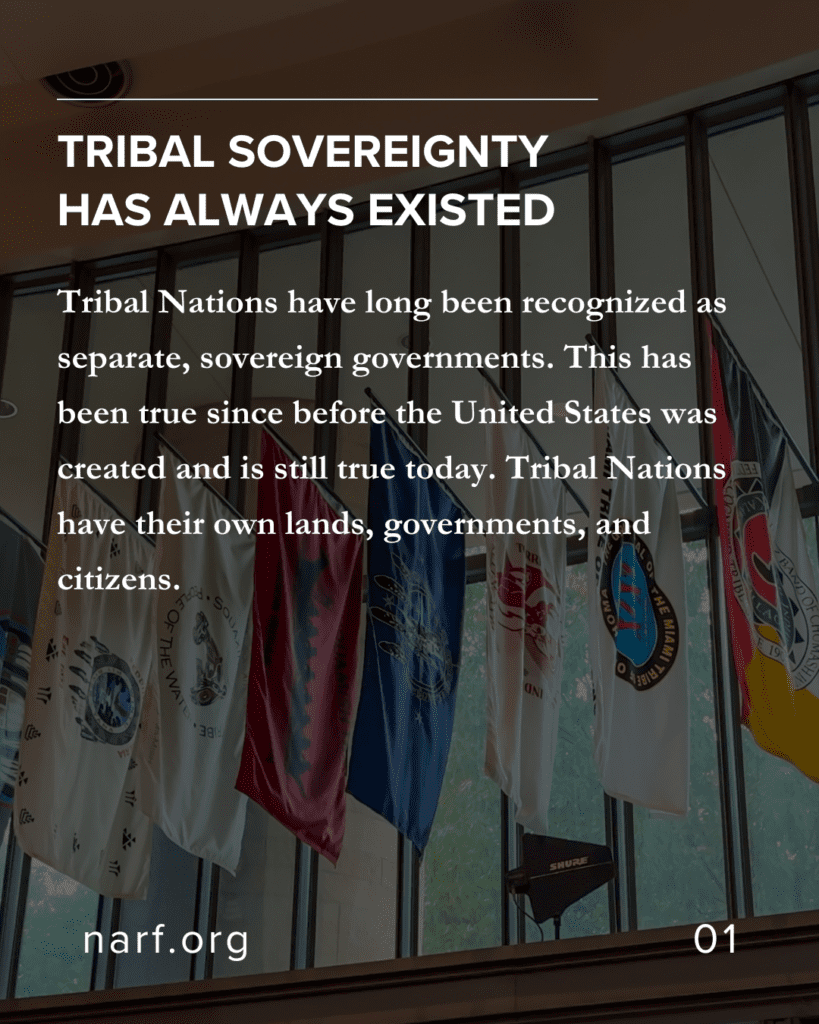
Tribal sovereignty has always existed
Tribal Nations have long been recognized as separate, sovereign governments. This has been true since before the United States was created and is still true today. Tribal Nations have their own lands, governments, and citizens.
Are Native Americans birthright citizens?
These issues came up in the Supreme Court case Trump v. Barbara. During the argument, Justice Gorsuch asked the attorney for the United States whether Native Americans have constitutional birthright citizenship under its legal theory. The government did not give a clear answer. While Native Americans are undoubtedly citizens of the United States today, the history of how that came to be is important.
The 14th Amendment & birthright citizenship
After the Civil War, the United States adopted the 14th Amendment. Its purpose was to give citizenship to formerly enslaved people and guarantee equal protection under the law. This amendment directly rejected the Supreme Court’s deeply racist Dred Scott decision. The 14th Amendment ensured birthright citizenship for children born in the United States and subject to U.S. jurisdiction, with a few narrow exceptions, such as children of foreign diplomats.
Native American citizenship denied in 1868
When the 14th Amendment was ratified in 1868, Tribal Nations were widely understood to be separate sovereigns, beyond the ordinary reach of the United States. As a result, Native people were not considered citizens of the United States, but rather of their Tribal Nation. This belief was also often rooted in racial prejudice against Native people and the belief that they were uncivilized.
A false comparison
Today, the federal government is trying to rewrite that history. It argues that Tribal Nations were always under U.S. authority, even when Native Americans were denied citizenship. The government uses this argument to justify its claims that immigrants lacking permanent legal status and people with temporary status are in the same position Native Americans once were and therefore are not citizens.
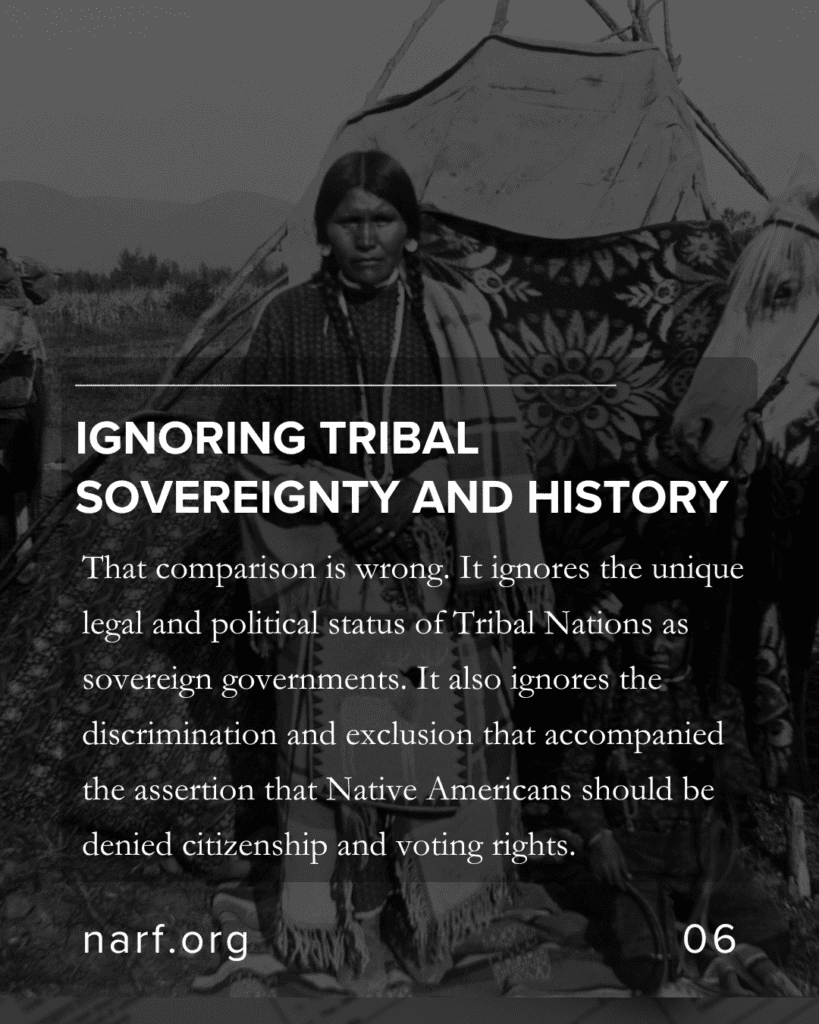
Ignoring Tribal sovereignty and history
That comparison is wrong. It ignores the unique legal and political status of Tribal Nations as sovereign governments. It also ignores the discrimination and exclusion that accompanied the assertion that Native Americans should be denied citizenship and voting rights.
Dual status: U.S. citizens & Tribal citizens
There is no question that Native Americans are U.S. citizens today. In 1924, Congress passed a law guaranteeing U.S. citizenship to all Native Americans. At the same time, Tribal Nations continue to be recognized as separate, sovereign governments with their own authority.