
This article was originally published on the website of The Implementation Project, a joint initiative of the Native American Rights Fund and Colorado Law to advance education and advocacy regarding the United Nations Declaration on the Rights of Indigenous Peoples.
The Implementation Project (TIP) attended the 25th Session of the United Nations Permanent Forum on Indigenous Issues from April 20 to May 1, 2026, to support Tribal leaders in ensuring attention to Indigenous Peoples’ issues arising in the United States and abroad. The theme of the 25th Session was “Ensuring Indigenous Peoples’ health, including in the context of conflict.”
During the Session, TIP hosted two side events featuring participants from across the globe. TIP’s first side event, “Self-Determination in Times of Peace and Conflict: Internal Relations and Indigenous Diplomacies,” brought together Dr. Albert K. Barume, the UN Special Rapporteur on the rights of Indigenous Peoples with prominent leaders in the field of Indigenous Peoples and diplomatic relations.
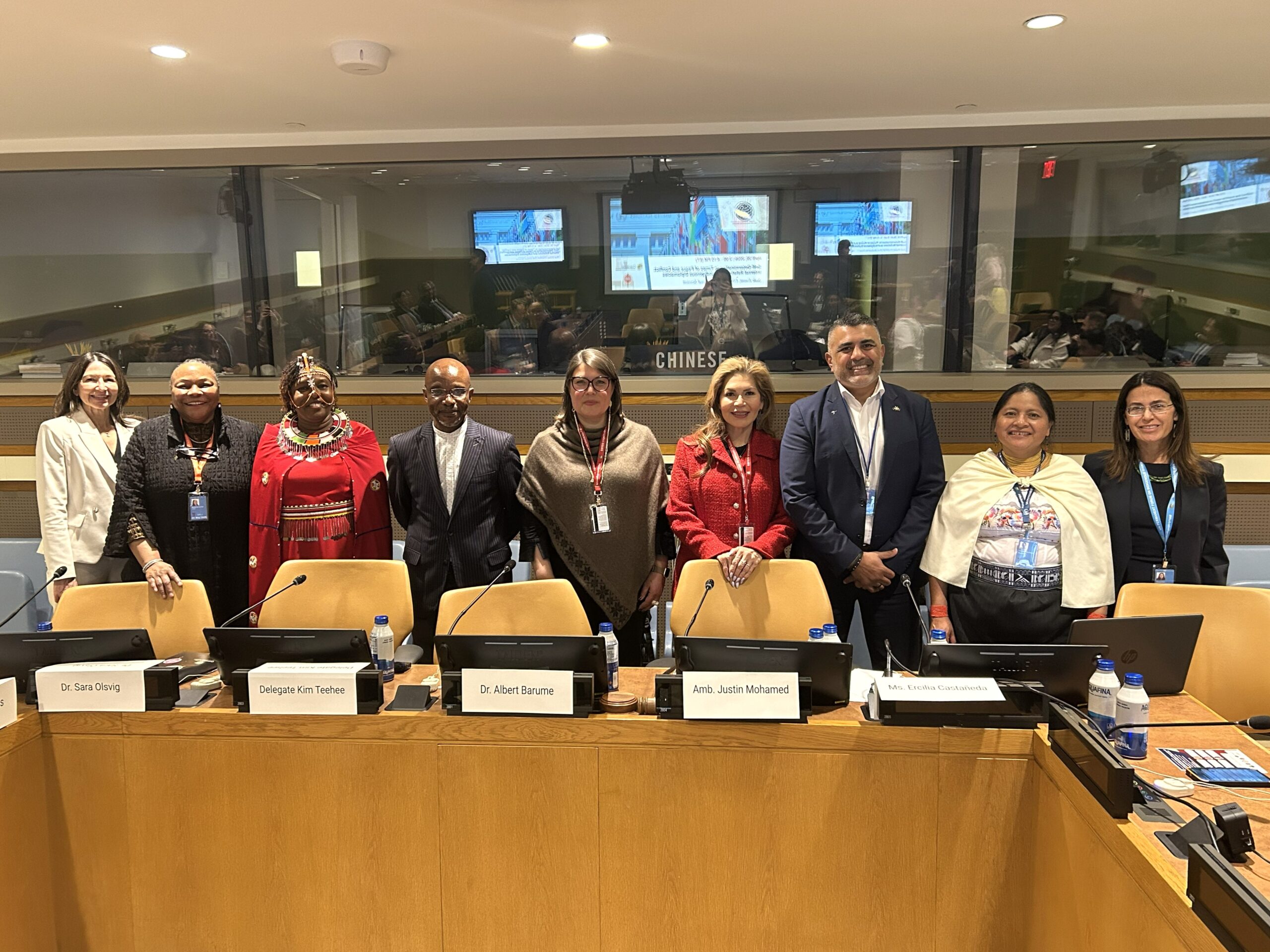
Dr. Barume, drawing on his report on identification, demarcation, registration and titling of Indigenous Peoples’ lands, emphasized that Indigenous Peoples’ self-determination is the answer to the human rights violations resulting from increased political and industrial demands for Indigenous Peoples’ lands. Kim Teehee detailed how the Cherokee Nation puts self-determination into practice through governance, language revitalization, and integrated Tribal health services. Jane Meriwas stated that participation for Indigenous Peoples is a right rather than a privilege and explained that effective diplomacy requires that venues for participation should change to reflect Indigenous values. Ercilia Castañeda remarked that 225 Indigenous rights defenders were arrested Ecuador with no access to recourse. Castañeda discussed the importance of Indigenous Peoples’ full participation as stakeholders to defend their rights and survival. Ambassador Mohamed highlighted the importance of practicing Indigenous diplomacy between Indigenous nations and State governments, as well as abroad to and promote international trade and investment opportunities with Aboriginal and Torres Straight Islanders. Finally, Sara Olsvig, speaking on her work with Inuit Peoples in four different Nation States throughout the Arctic region, addressed the importance of Indigenous Peoples’ cooperation across borders in order to assert their rights in a time human rights regression.
The side event was co-sponsored by: University of Colorado Law School, Native American Rights Fund, Australian Government, Cherokee Nation, National Congress of American Indians, and CONAIE: Confederación de Nacionalidades Indígenas del Ecuador. A recording of the side event is available here.
TIP hosted a second side event title “Indigenous Health in Unexpected Places: Plant Medicine, Economic Wellbeing, and Biodiversity Across International Agencies and Bodies,” featuring Indigenous leaders from the United States.
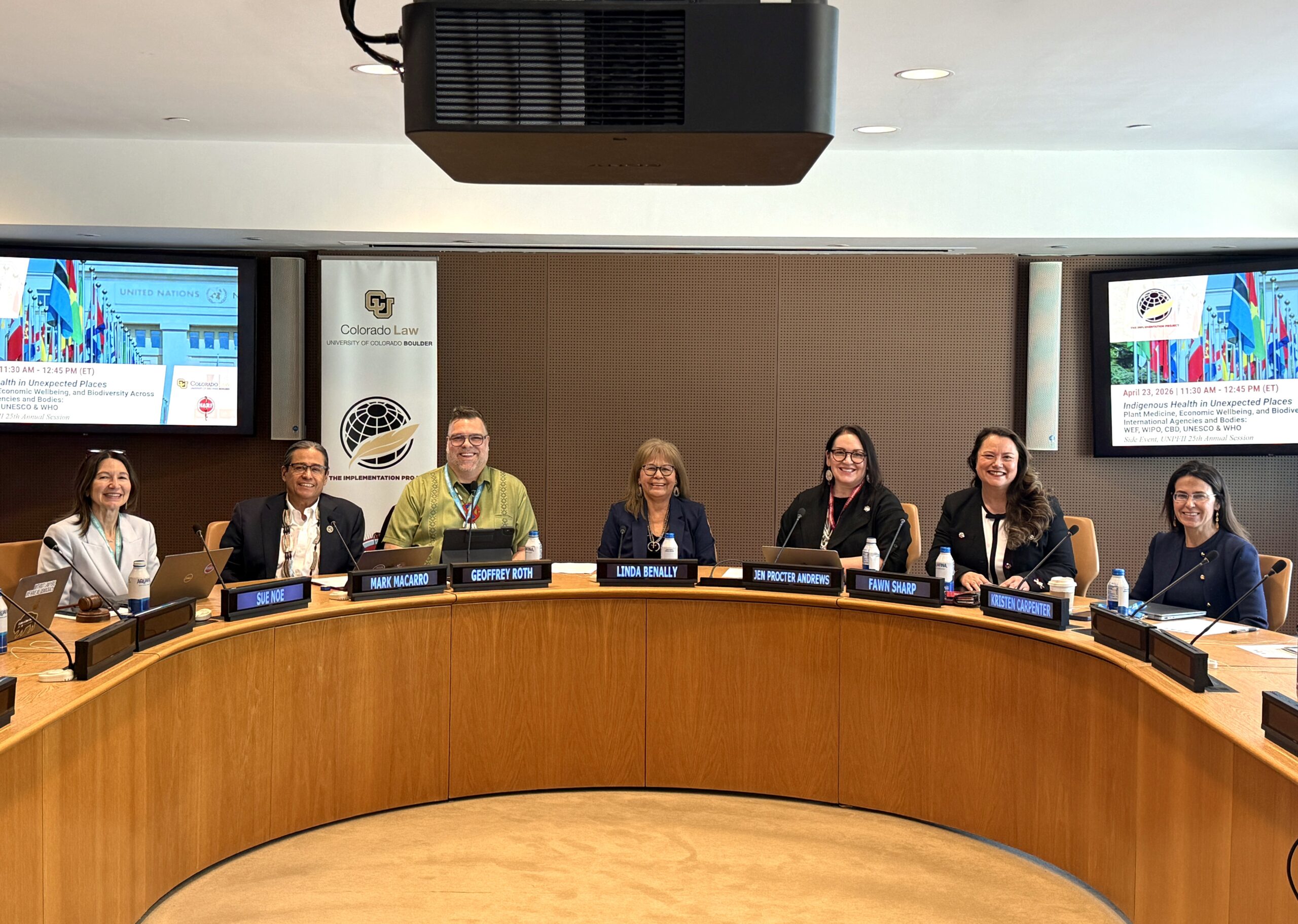
President Macarro delivered opening remarks on Indigenous health as a way of life that is deeply connected to identity, drawing on examples from his own tribal culture. Linda Benally noted the enhanced protections that international agreements such as the Declaration, Nagoya Protocol, and GRATK Treaty can provide for promoting access, use, and ownership of plant medicines like peyote and associated cultural practices.
Geoffrey Roth introduced a report he authored entitled, “Restoring Indigenous health by connecting systems through the Indigenous determinants of health: local to global evidence.” The report positions Indigenous health as an indicator of broader policy impacts that may be used to evaluate compliance with international human rights standards. It also identifies fragmentation as a core structural challenge in realizing Indigenous Peoples’ health and emphasizes the unifying potential of framing Indigenous health as a shared reference point. Vice Chair Procter Andrews discussed the Coquille Indian Tribe’s groundbreaking passage of their Indigenous Determinants of Health Ordinance, which provides a framework for ensuring that the Tribe’s governance and external relations advance the health and well-being of Tribal citizens. Fawn Sharp spoke on her work with on the Natural Capital Global Future Council at the World Economic Forum to develop a new finance and investment model that reflect Indigenous understandings of value and health.
The side event was co-sponsored by: University of Colorado Law School, Native American Rights Fund, Native American Church – State of New Mexico, Inc.; Indigenous Determinants of Health Alliance; and National Congress of American Indians. A recording of the side event is available here.
The 25th Session also provided an opportunity to celebrate the 25th anniversary of the mandate of the Special Rapporteur on the rights of Indigenous Peoples. The Special Rapporteur examines, monitors, advises, and publicly reports on the human rights situation of Indigenous Peoples worldwide. The event brought together current and former mandate holders, including Colorado Law Distinguished Professor James Anaya, who previously served as UN Special Rapporteur on the Rights of Indigenous Peoples. The speakers discussed how the mandate has shaped global advocacy and considered methods of ensuring that the mandate remains responsive, effective, and grounded in Indigenous Peoples’ lived realities going forward. A recording of the event is available here.
At the opening of the high-level dialogue on the implementation of Committee on the Elimination of Discrimination against Women general recommendation No. 39 on Indigenous women and girls, Dr. Barume provided an update on his work and priorities. He stressed that Indigenous health must be understood holistically: not only as access to medical services but also as the ability to live in dignity and peace. Additionally, Dr. Barume introduced the focus future work on the sexual and reproductive health rights of Indigenous women and girls.
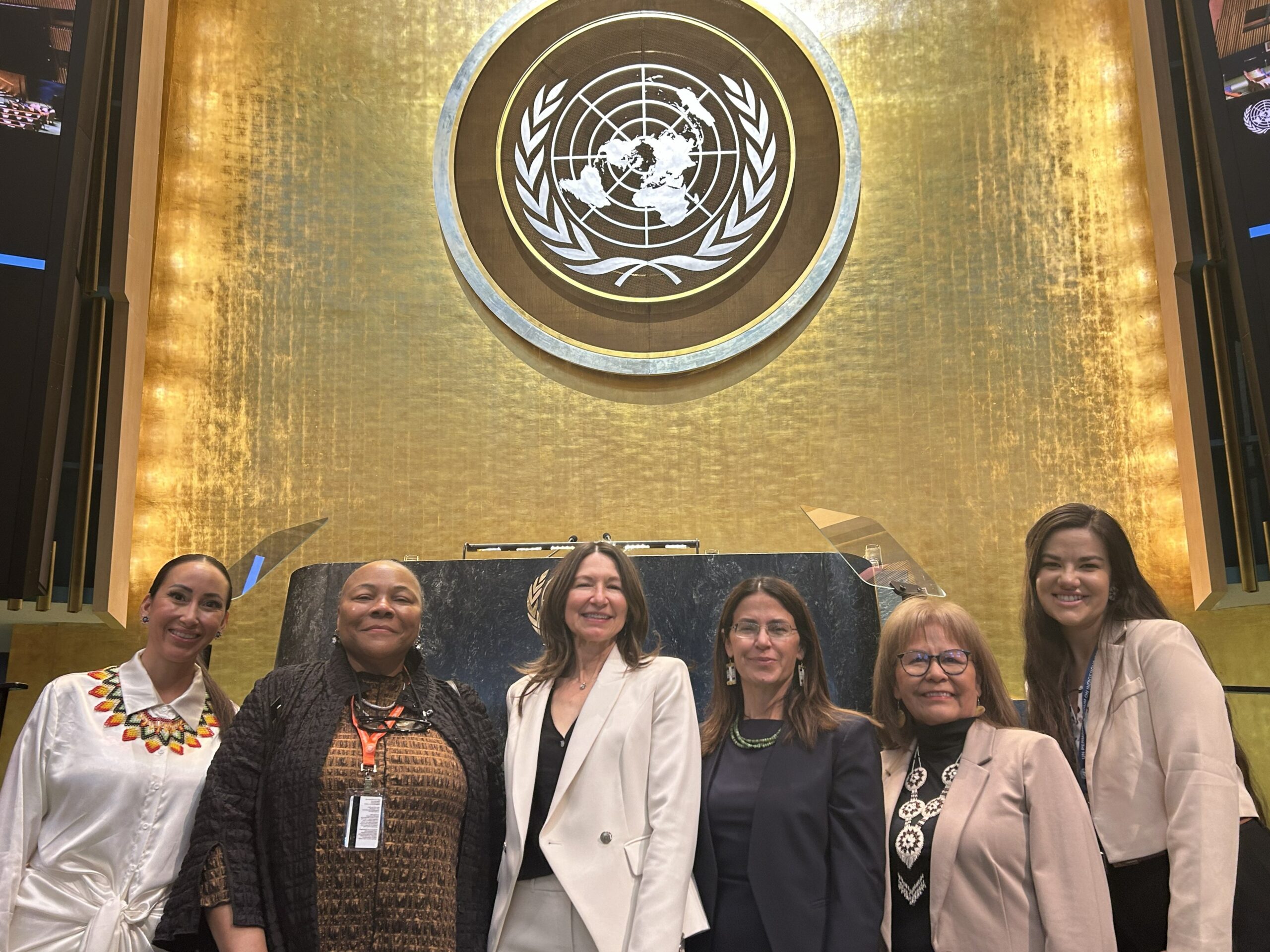
TIP collaborated with many Tribal leaders who were gratified to see their recommendations reflected the Permanent Forum’s Report on the 25th Session (the draft report and recommendations are available on the 25th Session homepage).
Cherokee Nation’s intervention emphasized that Indigenous health is a state of balance rooted in land, governance, culture, and the ability to sustain communities across time.
The National Congress of American Indians (NCAI) recognized the 2024 WIPO Treaty on Intellectual Property, Genetic Resources, and Associated Traditional Knowledge as a historic step and further urged member states to join and implement the treaty.
Native American Church – State of New Mexico’ intervention emphasized that Indigenous ceremonies and medicinal plants are not commodities, but living systems of knowledge connected to land, people, and self-determination. The intervention also expressed the need for international bodies to embrace the standard of free, prior and informed consent, especially for matters affecting Indigenous Peoples’ access to plant medicines and the protection of medical plant ecosystems.
The Indigenous Determinants of Health Alliance reported that 70% of Indigenous Peoples in the United States now live away from traditional lands in urban or metro areas and noted the health and cultural challenges associated with forced removal and migration. They also recommended the adoption of the Indigenous determinants of health framework to help ensure meaningful representation and support for urban and metro Indigenous Peoples.
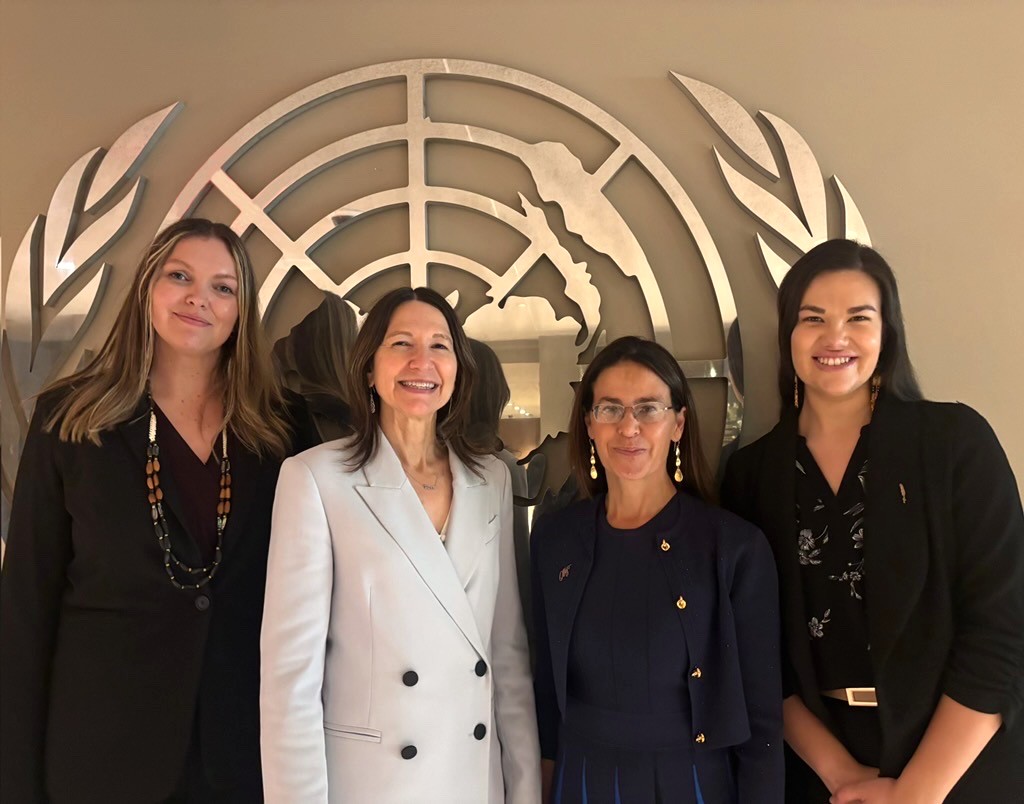
Kristen Carpenter and Sue Noe, together with Danielle Pourier and Hannah Ahders, led TIP’s work at the Forum. TIP was joined by Heidi Todacheene, who recently concluded her presidential appointment as Senior Advisor on Indigenous and international issues to Deb Haaland, former Secretary of the U.S. Department of the Interior. Colleagues joining from the University of Colorado Law School were Dean Lolita Buckner Inniss, Professor Christina Stanton, and law students Camila Peralta, Jonah Dixon, Chantal Raguin, Corinne Griffin, Ellie Gerstner, and Madison Rogers.
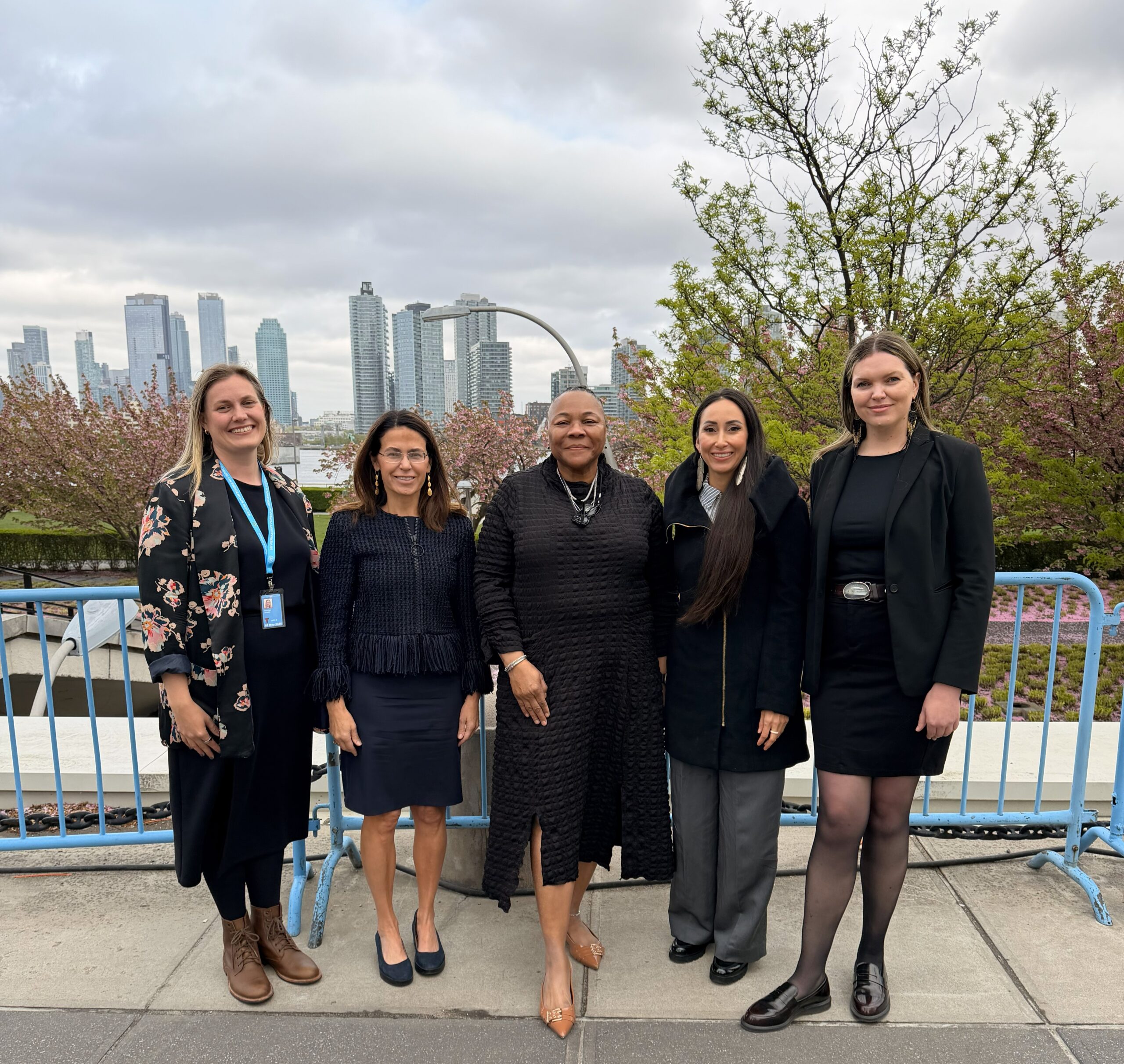
An advance unedited version of the Permanent Forum’s report of the 25th Session is available here. The 26th Session of the Permanent Forum will take place May 10-21, 2027, at the UN Headquarters in New York City.
Special thanks to Chantal Raguin and Hannah Ahders for co-authoring this article.
More blog posts