
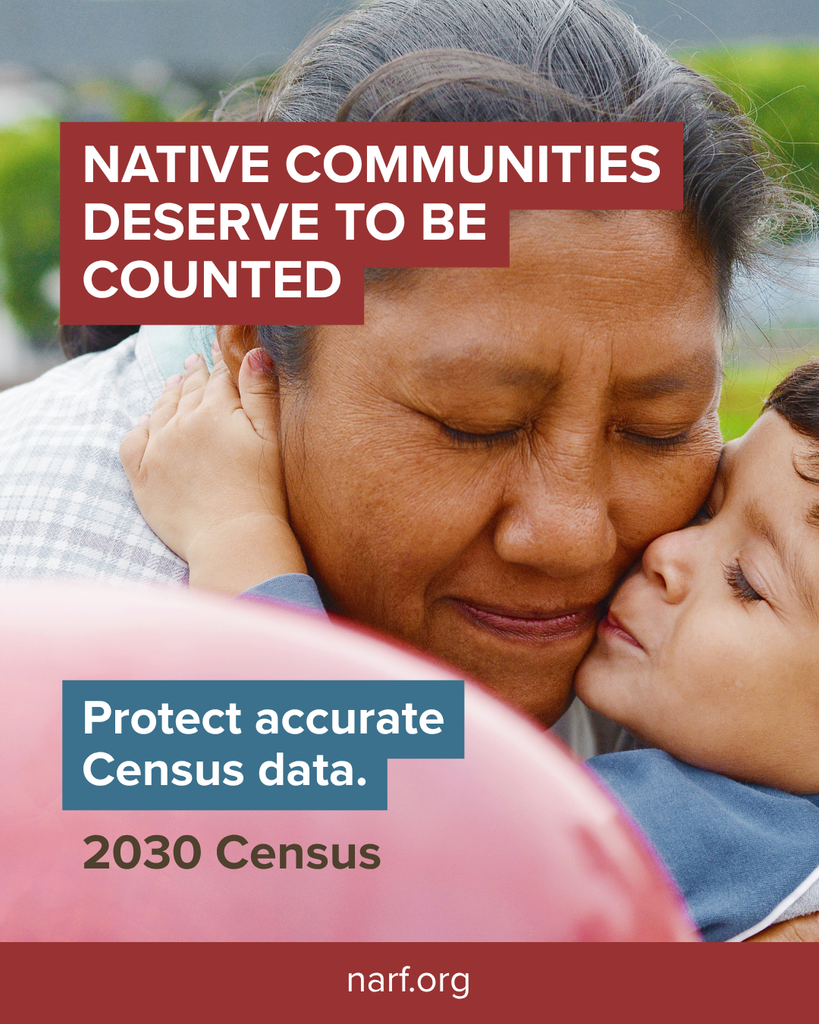
Every 10 years, the U.S. Census provides a picture of who lives in the United States and where. The data it collects helps determine political representation, guide federal funding, and shape decisions about public programs and services across the country. For Native people and Tribal communities, accurate Census data is especially important because it helps ensure they are represented in the information the federal government uses to make decisions and allocate resources.
In September, the Trump administration proposed major 2030 Census changes that could have significant consequences for Native communities. These include eliminating questions about race and ethnicity and limiting the population counted for congressional representation to U.S. citizens and lawful permanent residents.
If the proposed changes are carried out, Native people could become statistically invisible.
Census data helps determine political representation, draw electoral districts, enforce civil rights laws, and guide the distribution of federal resources. Without this important information, it would become much harder to identify where Native people live, understand the needs of Native communities, protect Native voting power, enforce civil rights laws, and ensure resources reach the people who need them.
The proposed changes would undermine Tribal sovereignty and self-determination.
Accurate Census data is essential for the federal government to fulfill its trust and treaty responsibilities to Tribal Nations. The government needs reliable data about Native populations and communities to allocate resources, administer programs, and ensure it is meeting its obligations.
Tribes also rely on consistent federal demographic data to advocate for resources, document disparities, and make governmental decisions. Removing Native identity from the questionnaire would leave Tribes with less control over how their communities are understood.
Voting-rights enforcement could become much harder.
Census race data is used to draw districts and evaluate whether Native voters have been unlawfully divided or placed in districts where they are outnumbered and their votes carry less weight. Removing it would weaken the evidence available for Voting Rights Act cases, especially following the Supreme Courts’ ruling in in Callais v. Louisiana.
Earlier in 2026, this ruling effectively gutted Section 2 of the Voting Rights Act — the foundational tool for Native voters and other voters of color to protect themselves from racial discrimination when voting, including in redistricting.
Tribes and Native-serving organizations could lose essential planning data.
Census figures help Tribal governments decide where housing, health care, schools, transportation, language services, and emergency resources are needed. Not every Tribal program is funded through a census-based formula, but inaccurate or missing data can make it significantly harder to plan and ensure needs are met.
Native communities could indirectly lose political representation.
The census currently counts everyone who usually lives in a state (citizens and noncitizens alike) when determining how the 435 seats in the U.S. House of Representatives are divided among the states. The proposed changes would instead only count U.S. citizens and lawful permanent residents.
Native citizens would still be counted, but excluding other residents could reduce a state’s official population total, potentially leaving it with fewer representatives in the U.S. House and fewer Electoral College votes.
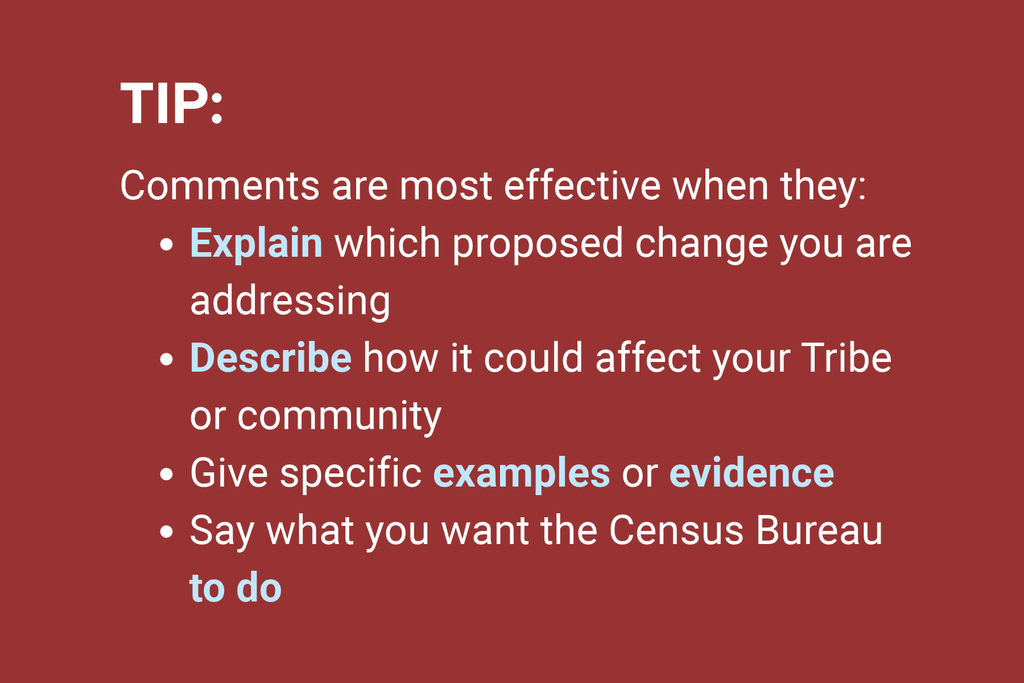
How to Weigh in on the Proposed Changes:
These proposed changes are not yet final. There are opportunities for the public, Tribal Nations, and Tribal organizations to weigh in before the Census Bureau moves forward with a final rule. Comments submitted during the rulemaking process become part of the official record, while Tribal consultation provides a specific opportunity for Tribal leaders and representatives to raise concerns and discuss the potential impacts on their communities.
- Tribal Consultation — October 2: The Census Bureau will hold a virtual Tribal consultation on October 2, 2026, from 3:00–4:30 p.m. ET. The consultation provides an opportunity for Tribal leaders and representatives to speak directly with the Census Bureau about how the proposed changes could affect Tribal Nations and Native people. Tribal leaders and representatives can register here.
- Public Comment Period — through October 13: Members of the public can submit comments on the proposed rule through October 13, 2026. Comments can address concerns with the proposed changes, their potential impacts, and recommendations for how the Census Bureau should proceed. Members of the public can submit comments here.
- Extended Tribal Comment Period — through November 2: Tribal Nations and Tribal-serving organizations have additional time to provide written comments. The deadline to submit comments on the proposed rule is November 2, 2026. Comments can be submitted through the Federal Register’s proposed rule page here.
Comments can also be submitted by mail:
U.S. Census Bureau
4600 Silver Hill Road
Designation: ADDEMO/FRN
Washington, DC 20746