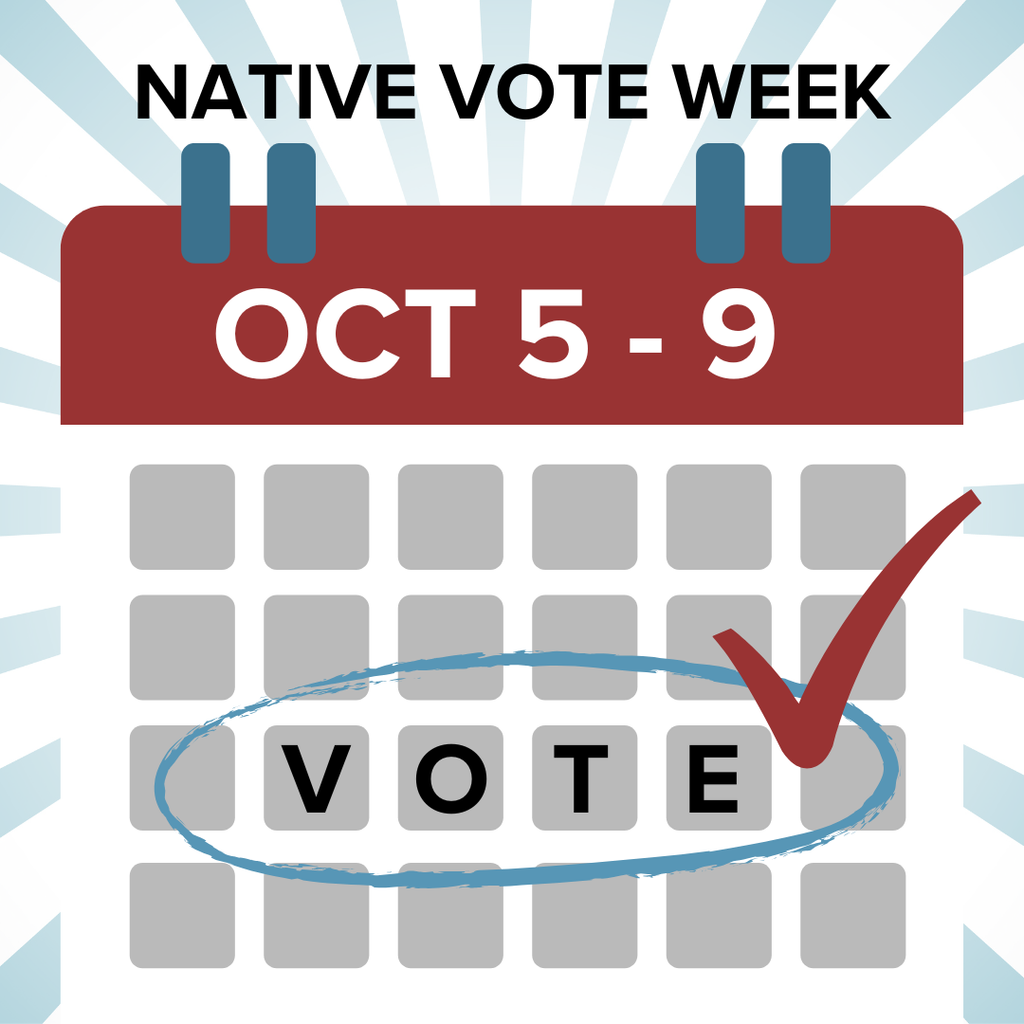
In honor of Voter Education Week (October 5-9, 2026), the Native American Rights Fund is holding a Native Vote Week to focus attention on Native voting rights and to uplift Native power at the polls. Native Vote Week calls attention to the strength of the Native vote, the obstacles placed in our way, and the ongoing fight to protect our sovereignty and our future.
Every day this week, NARF will highlight a different Native voter resource or awareness tool!
October 5 – Where can Native voters find Election Resources?
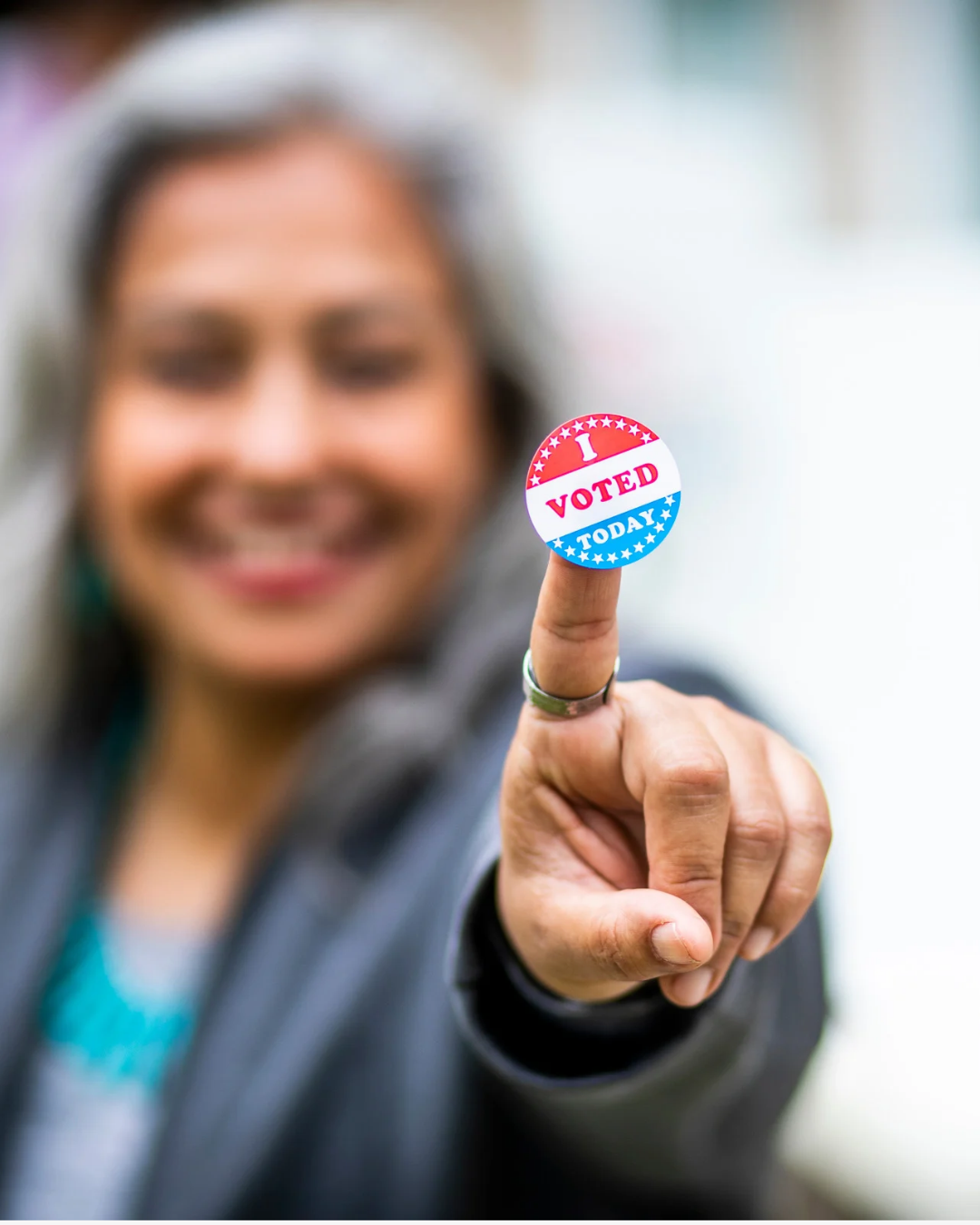
To kick things off, we’re sharing our voter resources with information to help Native voters understand their voting rights, registration, voting access, and more. Finding accurate, Native-focused voting information can be difficult, but we’ve made it easier!
Follow along and explore our voter resources: https://vote.narf.org/advocacy-actions/
October 6 – What does voting access look like for Native voters
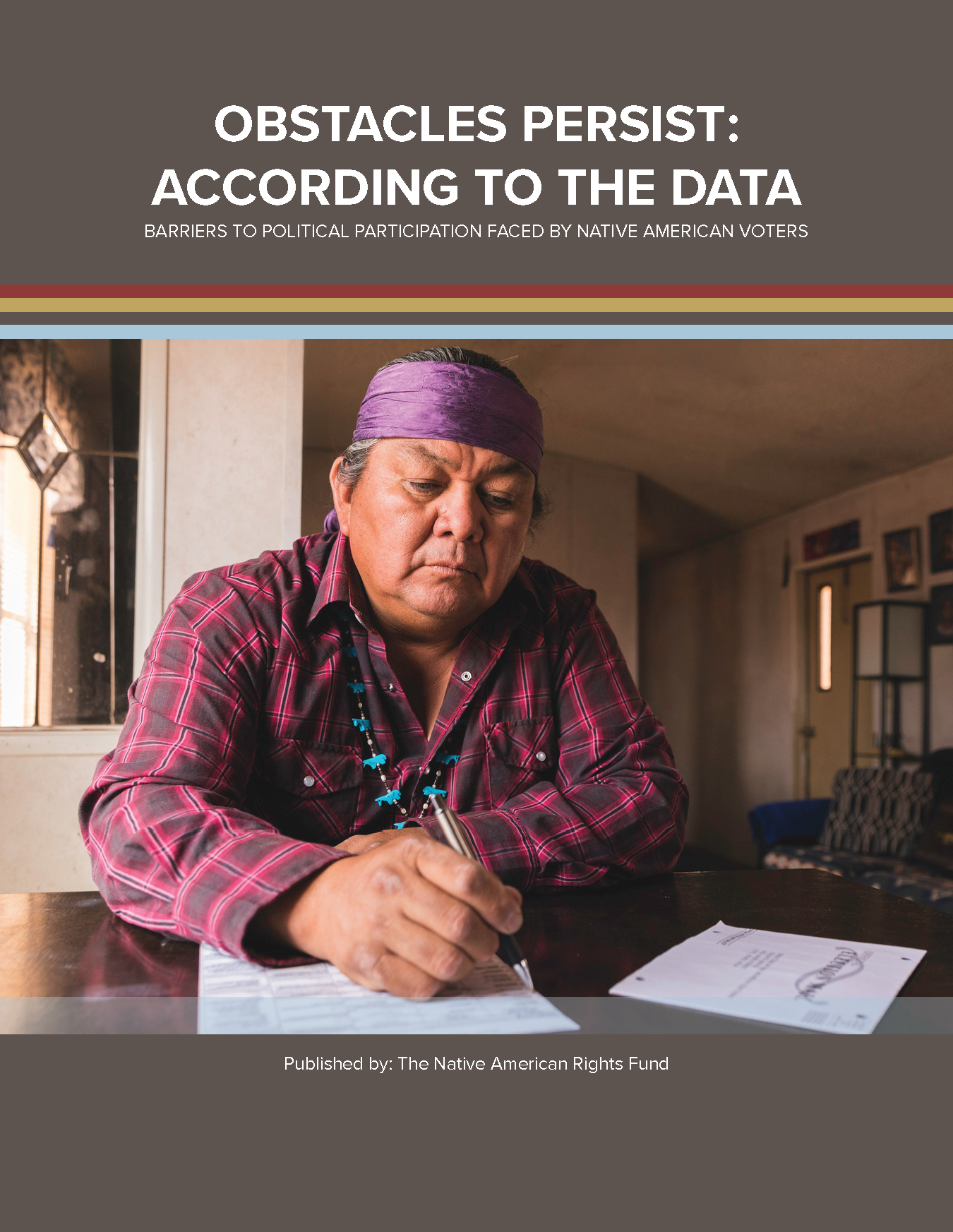
Our new report, Obstacles Persist: According to the Data, examines barriers Native voters face throughout the voting process. From registration and voter rolls to mail ballots, provisional ballots, and ballot rejection.
Drawing on election administration data from 2020, 2022, and 2024, the report documents persistent disparities in voting access for Native voters. Among its findings, new voter registrations in counties with large Native voter populations declined by 59% from 2020 to 2024, while provisional ballot use more than doubled as a share of total votes cast.
Understanding these barriers is an important step toward addressing them. Read the full report: https://vote.narf.org/obstacles-at-every-turn/
October 7 – Why should Congress pass a Native American Voting Rights Act?
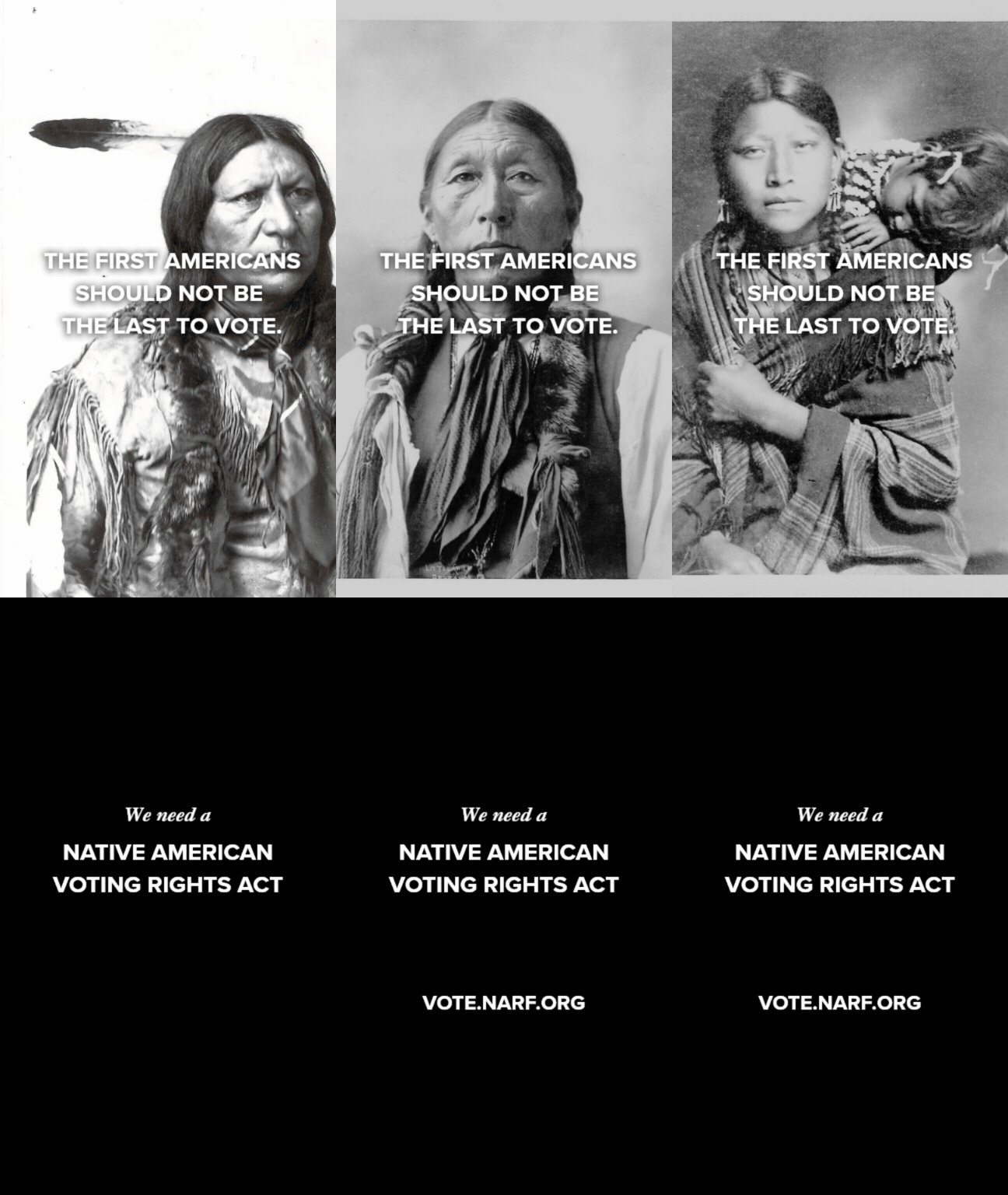
The record is clear: Native voters have prevailed in more than 90% of the voting rights cases they have brought.
But protecting the right to vote should not require repeatedly going to court. Distant polling locations, limited mail service, unreliable broadband, and inadequate Native language assistance continue to undermine equal access to the ballot.
A Native American Voting Rights Act would strengthen federal voting protections to address the realities of voting in Tribal communities.
Native voters have defended their rights again and again. Congress must do its part.
Learn more: https://vote.narf.org/native-american-voting-rights-act-navra/
October 8 – How will you vote?
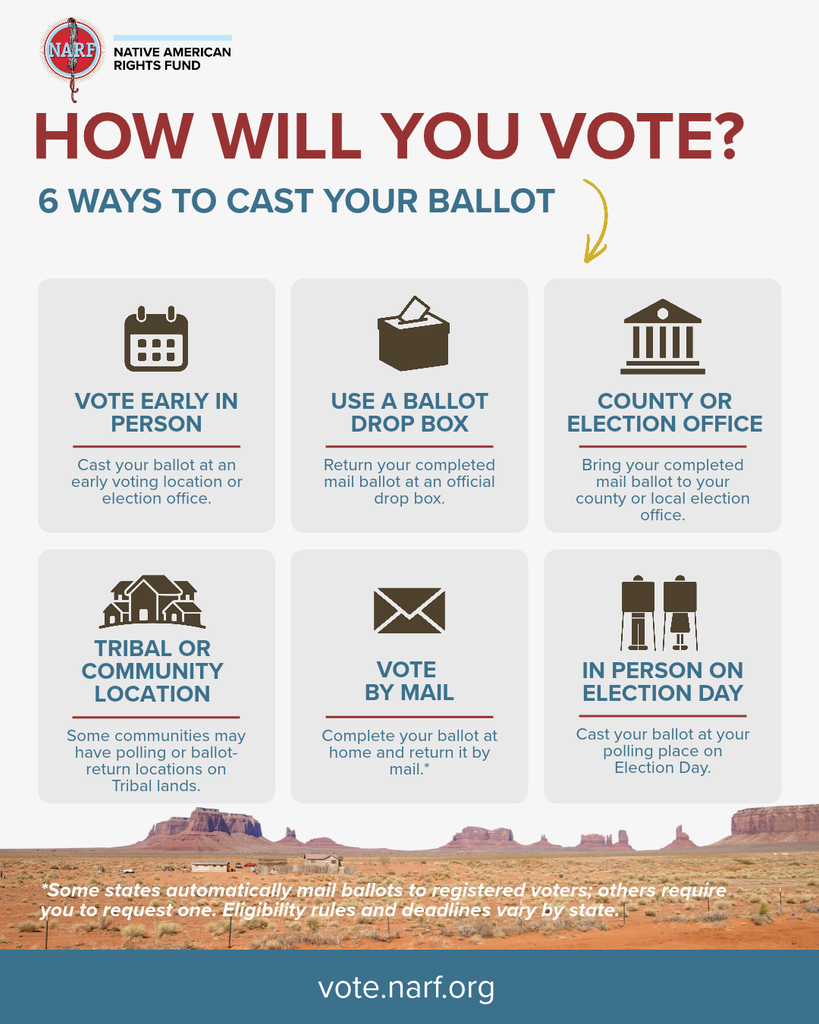
Election Day is November 3. But there are several ways to cast your ballot ahead of time.
Depending on where you live, you may be able to vote early in person, return your ballot at an official drop box or designated location, or vote by mail.
Knowing your options ahead of time can help you make a plan that works for you. Check your state or local election website for voting locations, dates, deadlines, and requirements.
Know your options and make a plan: vote.narf.org
October 9 – WATCH: The Power of the Native Vote
Every ballot is an opportunity to elect representatives who understand Native communities and influence decisions that affect Tribal Nations, families, and future generations.
Watch to learn about the impact of the Native vote, then help others take the next step: share registration resources with your community.
When we vote, we help choose who makes decisions that affect our families and our Tribal communities.
Make sure you’re ready:
✔️ Check your voter registration.
✔️ Register or update your information if needed.
✔️ Remind a friend or relative to check theirs.
[VIDEO COMING OCTOBER 9!]
More blog posts