
Across Indian Country, Tribal Nations are finding ways to work with federal and state governments to protect their lands, waters, and natural resources. Cooperative arrangements, including co-management and co-stewardship agreements, can create important opportunities for collaboration. But successful partnerships require more than an agreement on paper. They must be grounded in respect for Tribal sovereignty, meaningful decision-making authority, trust, and sustained resources.
To support Tribal Nations and their partners in navigating these relationships, we created a resources that explores the principles behind effective cooperative arrangements and the practical tools for putting them into action.
Understanding Cooperative Arrangements
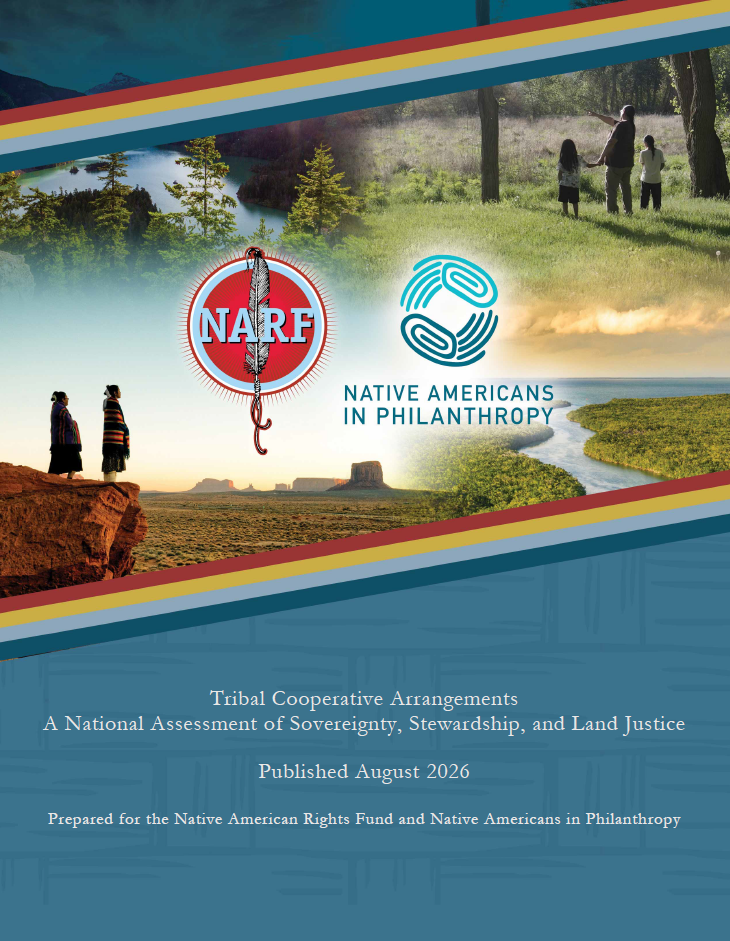
Tribal Cooperative Agreements: A National Assessment of Sovereignty, Stewardship, and Land Justice presents findings from a national assessment conducted by the Native American Rights Fund (NARF) and Native Americans in Philanthropy from August 2025 through August 2026. Drawing on perspectives from Tribal leaders, practitioners, cultural knowledge holders, and advisors, the assessment examines Tribal experiences with co-management, co-stewardship, conservation easements, land trusts, and other collaborative approaches.
The findings identify four conditions Tribal Nations have identified as essential to successful cooperative arrangements: respect for Tribal sovereignty and treaty rights; meaningful shared decision-making authority; long-term, trust-based relationships; and adequate funding, staffing, and technical support. The assessment also emphasizes that cooperative arrangements are a means to a larger goal and not an end in themselves. For many Tribal Nations, the ultimate priorities are strengthening Tribal authority, advancing self-determination, protecting lands and waters, and creating pathways toward land return. If you would like to share or educate others on this topic, download our Tribal Cooperative Agreements: A National Assessment of Sovereignty, Stewardship, and Land Justice presentation.
More Resources